

If you’re researching swimming pools for the first time, fibreglass is likely one of the first options you’ll come across. It’s one of the most popular choices for UK homeowners, and for good reason. But like any significant investment, it pays to understand exactly what you’re getting before you commit.
This guide covers how fibreglass pools are made, what makes them different from other construction methods, their real advantages and limitations, and what to look for when choosing a supplier. XL Pools installs fibreglass pools across Kent and the wider region, and everything here is based on what we see and hear from homeowners going through the process.
What Is a Fibreglass Pool?
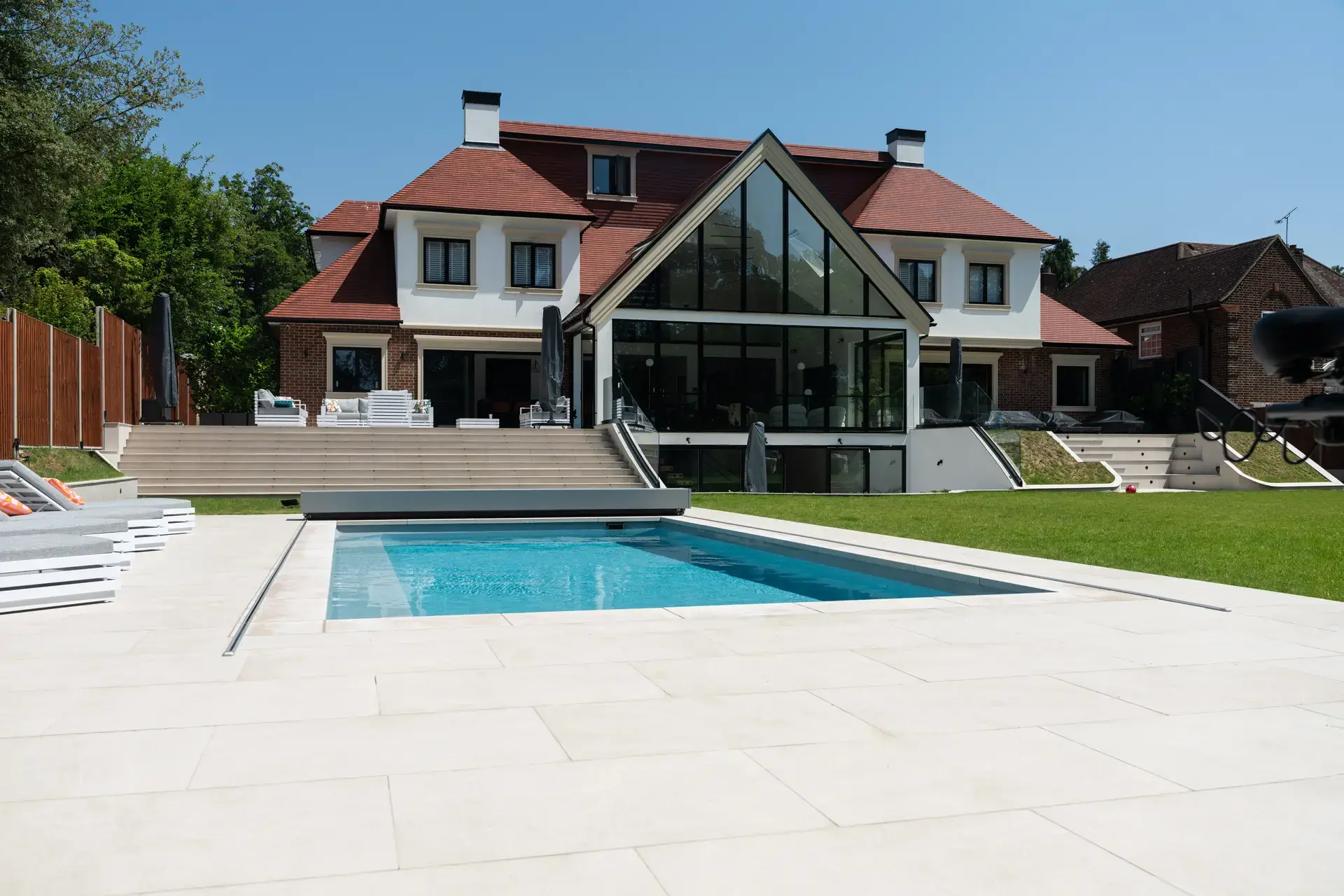
A fibreglass pool is a one-piece shell, manufactured off site in a purpose-built facility and delivered to your garden ready to install. The shell itself is made from layers of fibreglass matting saturated in resin, built up over a mould to create a structure that is both strong and flexible.
The finished shell has a smooth gel coat surface, which is the layer you’ll actually see and touch when you’re in the pool. This surface is non-porous, which has significant practical benefits for water quality and maintenance that we’ll come to shortly.
Because the pool is manufactured in a factory rather than built on site, the quality of the shell is consistent and the production process is tightly controlled. XL Pools is the exclusive UK distributor and installer of Aqua Technics pools, who have been manufacturing award-winning fibreglass pools for over 45 years and operate their own in-house R&D department. That manufacturing heritage matters when you’re choosing a fibreglass pool.
How Is a Fibreglass Pool Installed?
The installation process for a fibreglass pool is one of its most appealing qualities. Once the site has been excavated and prepared, the shell arrives on a lorry and is craned or manoeuvred into position. Backfilling, pipework connections, and final finishing follow, and the pool is typically ready to fill within days of the shell arriving on site.
The full process from groundworks to completion is faster than a concrete or composite build, often considerably so. Our guide on how long it takes to build a pool covers the full timeline in more detail, but for a straightforward fibreglass installation, the active build phase is typically measured in weeks rather than months.
The one significant access consideration is that the shell needs to travel from the lorry to the excavation in one piece. This means either a clear route through the garden, wide enough for the shell to pass through without obstruction, or a crane lift. For most properties this isn’t an issue, but it’s worth discussing early on with your installer if your garden access is restricted.
The Real Advantages of a Fibreglass Pool
Low Maintenance
This is the benefit most fibreglass pool owners mention first. The gel coat surface is non-porous, which means algae struggle to take hold in the same way they can on concrete or marbelite surfaces. The water requires less chemical intervention to stay clean, and the surfaces are easier to brush and clean when needed.
Over the lifetime of a pool, the difference in chemical costs and cleaning time between a fibreglass pool and a concrete one is meaningful. For homeowners who want a pool they can enjoy without spending their weekends maintaining it, fibreglass has a genuine practical advantage. Our seasonal pool maintenance guide covers what good year-round maintenance looks like regardless of pool type, but fibreglass owners consistently find the routine easier to manage.
Comfort
The smooth gel coat surface is noticeably more comfortable underfoot than the rougher finishes associated with concrete pools. For families with children who spend a lot of time in the pool, this makes a real difference to the day-to-day experience.
Speed of Installation
As covered above, a fibreglass pool can be installed significantly faster than a concrete or composite alternative. If you’re working to a deadline, such as wanting the pool ready for a particular summer, fibreglass is usually the more reliable option.
Durability
A quality fibreglass shell is built to last. Aqua Technics pools are reinforced with Nano Graphene technology, which strengthens the structure at a molecular level, making the shell exceptionally resistant to impact and ground movement. With proper care, a well-made fibreglass pool will remain in excellent condition for decades.
Energy Efficiency
Fibreglass shells provide better thermal insulation than concrete, which means the water retains heat more efficiently. Combined with a good heat pump and pool cover, a fibreglass pool can be kept at a comfortable swimming temperature for a longer season with lower running costs than a comparable concrete pool.
The Limitations Worth Knowing About
Fixed Shapes and Sizes
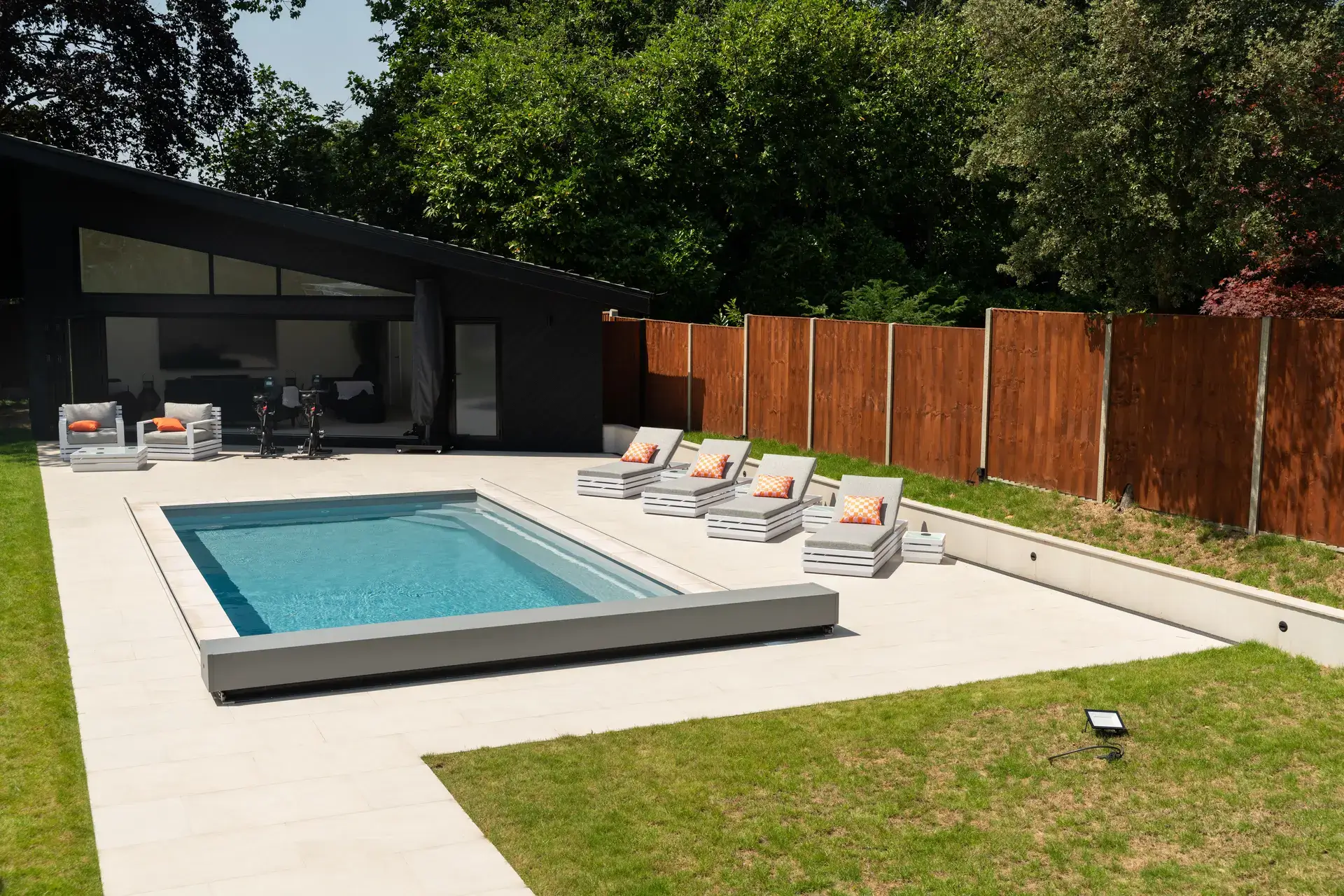
A fibreglass pool is manufactured over a mould, which means the available shapes and sizes are those the manufacturer produces. Aqua Technics offers one of the widest ranges on the UK market, including the widest and deepest one-piece pool available in the country, so there’s significant choice. But if you have a very specific dimension or unusual shape in mind that falls outside what’s available, a site-built pool may be the only option.
Access Restrictions
As mentioned above, the shell arrives in one piece and needs to reach the excavation as one piece. Properties with very restricted access, narrow gates, or limited manoeuvring space may not be suitable for a one-piece fibreglass installation. Your installer should assess this at the site visit stage, before any decisions are made.
Surface Repair
If the gel coat surface is damaged, repair work is more specialised than patching concrete. It’s rarely needed, but it’s worth being aware of. A reputable manufacturer and installer will offer guidance on care and surface maintenance to minimise the risk.
Fibreglass vs Concrete
If you’re weighing up construction methods, our dedicated guide to fibreglass vs concrete pools covers the comparison in detail. The short version is that fibreglass wins on maintenance, speed, and comfort, while concrete offers greater flexibility for bespoke shapes and sizes. Neither is universally the right answer. The best construction method for your pool depends on your garden, your brief, and how you plan to use the space.
What to Look for in a Fibreglass Pool Supplier
Not all fibreglass pools are made to the same standard, and not all installers have the same level of experience. A few things worth looking for when choosing who to work with:
The manufacturer’s track record matters. A company that has been producing fibreglass pools for decades, investing in its own R&D and using advanced materials, is a fundamentally different proposition to one offering cheaper shells of unknown provenance.
SPATA accreditation is the UK industry benchmark for pool builders. It means the installer has been assessed against a recognised standard for quality, safety, and professionalism. It’s a straightforward way to separate credible operators from those without external accountability.
Award recognition provides an additional layer of validation. XL Pools’ Gold win at the 2026 British Pool & Hot Tub Awards reflects the standard we hold ourselves to across every project.
A site visit before any recommendation is made is non-negotiable. Access, ground conditions, drainage, and the available space all affect what’s achievable. A supplier who quotes without visiting is guessing, not advising.
Ready to Talk About Your Fibreglass Pool?
XL Pools installs Aqua Technics fibreglass pools across Kent and the South East. Whether you’re at the very early stages of research or ready to get started, we’re happy to come out, look at your garden, and give you an honest picture of what’s possible.
Browse our completed pool projects to see the range of fibreglass pools we’ve delivered, find out more about us on our about us page, or get in touch to arrange a visit today.


