
If you’re considering investing in a swimming pool this year, one of the first decisions you’ll face is whether to choose a fibreglass or concrete pool. It’s a question we’re asked regularly at XL Pools, and the answer depends entirely on your space, your vision and how you plan to use your pool long term.
As experienced swimming pool builders in Kent, we’ve installed both types across a wide range of properties, from compact family gardens to large, bespoke outdoor spaces. Below, we break down the key differences to help you decide which option is right for your home in 2026.
What is a Fibreglass Pool?
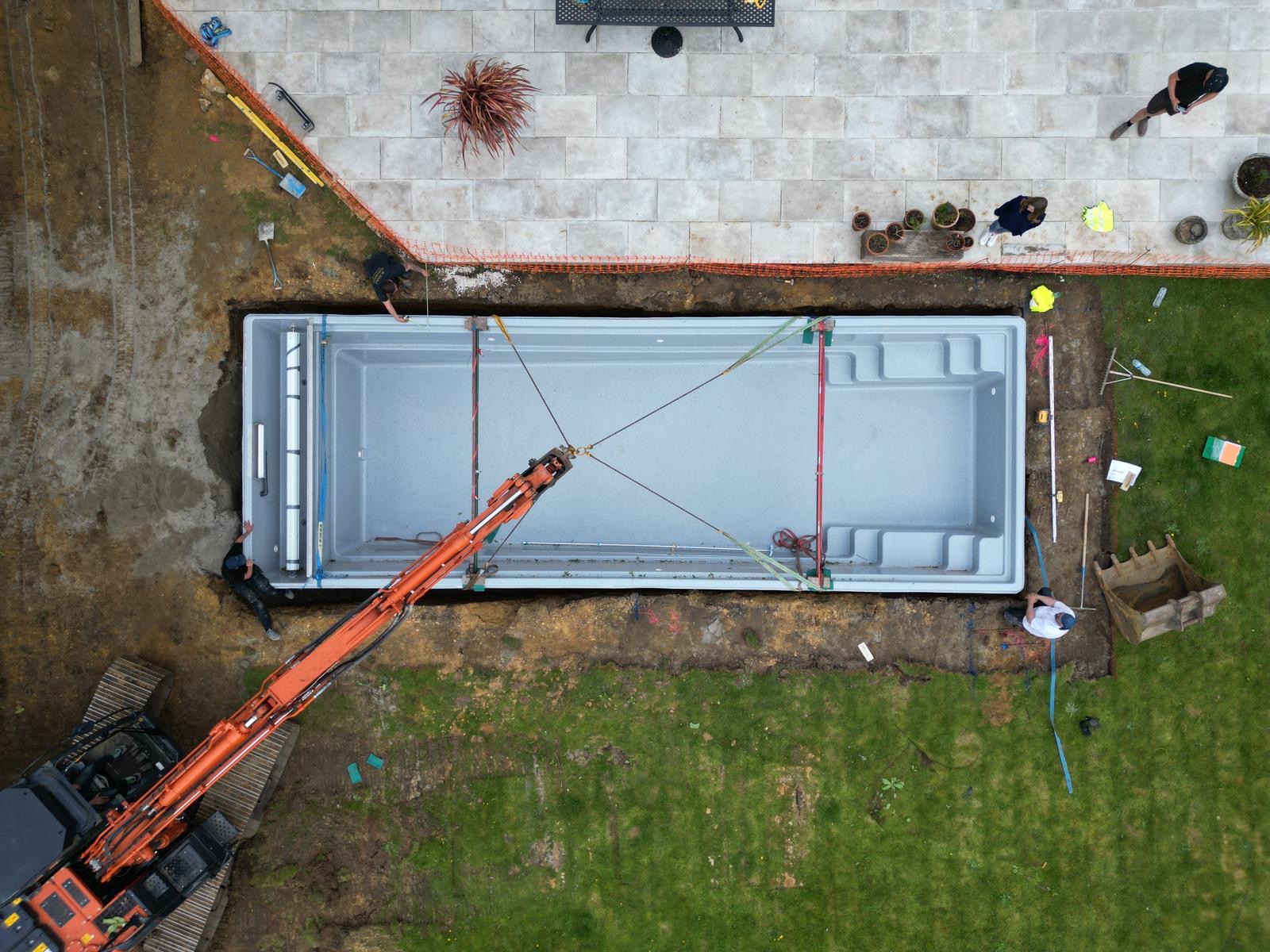
A fibreglass pool is manufactured off-site as a single pre-formed shell and delivered to your property for installation. Once excavation is complete, the shell is carefully craned into place, connected to plumbing and electrical systems, and backfilled.
One of the biggest advantages of fibreglass is speed. Installation is typically quicker than concrete, which appeals to homeowners who want to minimise disruption.
Advantages of a Fibreglass pool
- Faster installation time
- Smooth, non-porous surface (less algae growth)
- Lower ongoing maintenance requirements
- Predictable installation costs
Considerations
- Limited design flexibility compared to concrete
- Size and shape restrictions
- Site access must allow delivery of the shell
For many families, fibreglass offers a practical and efficient solution. However, it’s important to work with a professional pool installer who can assess whether your garden layout is suitable.
What is a Concrete Pool?
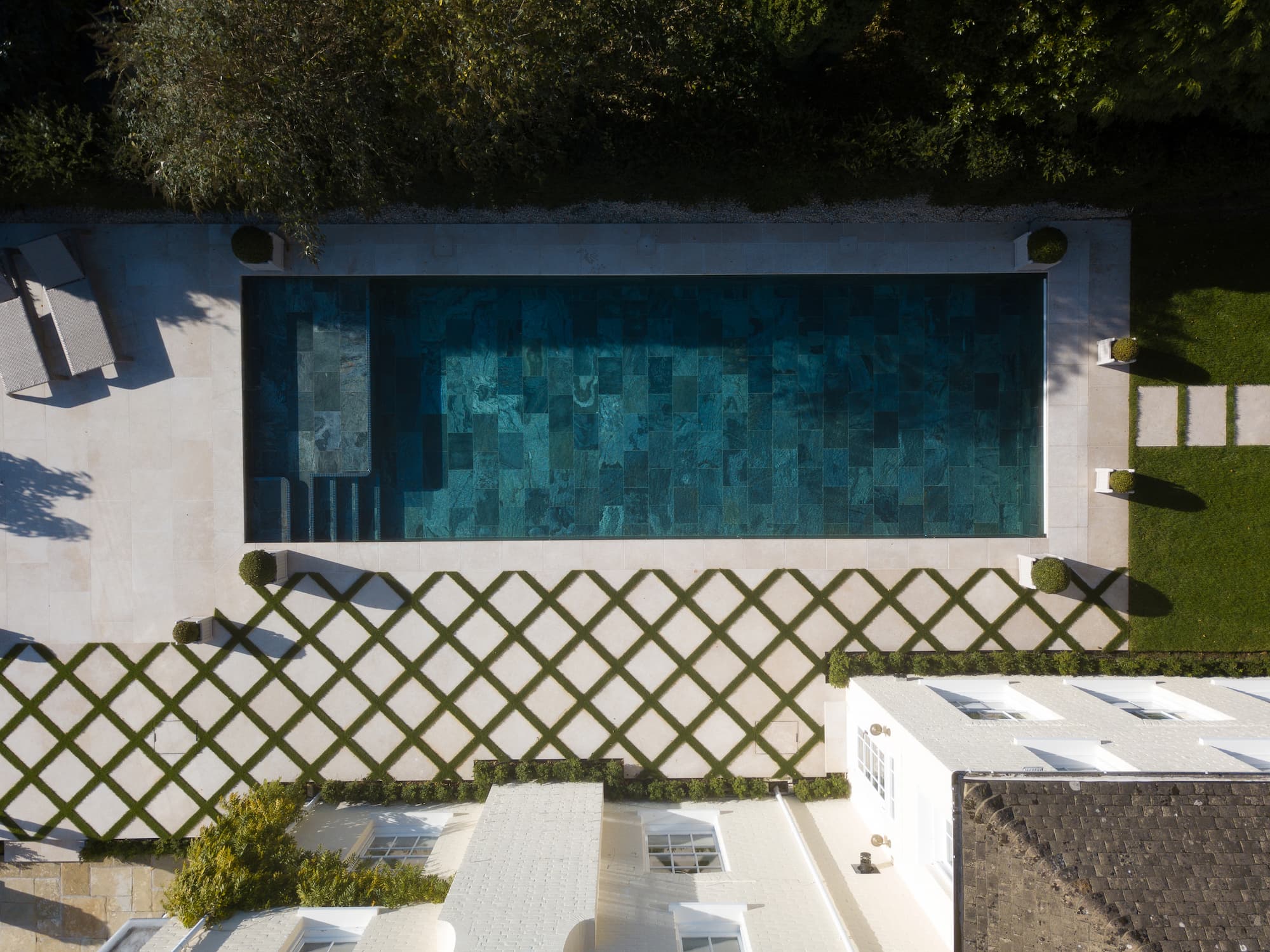
Concrete pools are built on-site and fully customised to your space. Steel reinforcement is installed first, followed by sprayed or poured concrete, curing, waterproofing and your chosen finish.
This construction method allows complete flexibility in terms of shape, depth and features, making it ideal for more ambitious designs.
Advantages of a Concrete Pool
- Fully bespoke design
- Suitable for complex or sloped gardens
- Ideal for integrated spas, infinity edges or premium finishes
- Strong, long-lasting structure
Considerations
- Longer build timeline
- Higher upfront investment
- More ongoing surface maintenance
Concrete pools are often chosen by homeowners looking for a luxury, tailored result. As swimming pool builders, this is where our craftsmanship and experience makes a real difference.
Installation Timeline: What to Expect
One of the most common questions we’re asked is how long installation takes.
With a fibreglass pool, once groundwork is complete, installation can move quickly. The shell is delivered and craned into position, plumbing and electrics are connected, and backfilling begins. In many cases, this phase can be completed within a few weeks, depending on site access and weather conditions.
Concrete pools take longer due to the staged construction process. After excavation, steel reinforcement is fitted, concrete is applied, and crucially, curing time is required before finishing work begins. This method allows complete design freedom, but the build period is typically longer.
An experienced swimming pool installer will provide a clear project schedule from the outset. At XL Pools, we ensure our clients understand each phase, from design and approvals through to final handover.
Maintenance and Energy Efficiency
Long-term maintenance is another key factor when choosing between fibreglass and concrete.
Fibreglass pools have a smooth, non-porous surface. This reduces algae growth and makes cleaning more straightforward. Because the surface is less absorbent,
chemical use can often be lower, and ongoing maintenance requirements are typically reduced.
Concrete pools have a more porous surface depending on the chosen finish. While modern finishes are highly durable, they may require more attentive maintenance over time to preserve appearance and performance.
When it comes to energy efficiency, both pool types can integrate modern systems such as variable-speed pumps, efficient heating solutions and automated controls. Heating retention can also be influenced by insulation, pool covers and overall design.
Break it Down: Which Option is Right for You?
There is no universal answer, the right choice depends on your priorities.
Fibreglass may be ideal if:
- You want a quicker installation timeline
- You prefer lower maintenance
- A pre-designed shape suits your garden
Concrete may be better suited if:
- You want a fully bespoke design
- Your garden has complex levels or unique dimensions
- You’re incorporating luxury features such as an infinity edge
The size of your garden, access for machinery, your budget and your long-term plans all play a role. That’s why early consultation is so important.
Why Work With an Experienced Swimming Pool Builder?
Whether you choose fibreglass or concrete, the quality of installation is what ultimately determines longevity, safety and performance.
At XL Pools, we don’t simply install pools, we guide our clients through every stage of the process. From initial design discussions to handover and aftercare advice, our aim is to ensure your pool is not only beautifully built but built to last.
If you’re considering a new pool in 2026 and would like tailored advice on whether fibreglass or concrete is right for your home, our team would be happy to help you take the next step.
Book a design consultation today → https://xlpools.com/enquire/


