
Owning a swimming pool is one of life’s great pleasures, but keeping it in peak condition takes consistent attention throughout the year. Swimming pool maintenance isn’t just about clear water. It’s about protecting your investment, extending the life of your equipment, and making sure your pool is safe and ready to use whenever you want it.
This guide walks you through exactly what to do and when, season by season. Whether you’re a first-time pool owner or looking to get more out of a pool you’ve had for years, this is your starting point.
Why Swimming Pool Maintenance Matters Year-Round
Many pool owners make the mistake of thinking maintenance only matters during swimming season. In reality, the work you do in autumn and winter directly affects how your pool performs come spring and summer.
Neglected pools are expensive to fix. Algae blooms, chemical imbalances, and equipment failures are all far more costly to address than they are to prevent. A consistent maintenance routine, or a professional service to handle it for you, is always the more economical choice in the long run.
At XL Pools, we offer a pool maintenance service for homeowners across Kent and the South East who want the peace of mind that comes with professional upkeep.
But whether you manage your pool yourself or bring in the experts, understanding what good maintenance looks like is always worthwhile.
Spring: Opening Your Pool for the Season
Spring is when most UK pool owners start thinking about getting back in the water. Getting your opening routine right sets the tone for the entire season ahead.
Check and Balance Your Water Chemistry
After a winter of reduced use, your pool’s chemical balance will need attention. Test the water for pH, alkalinity, calcium hardness, and sanitiser levels before anything else. The ideal pH range for a swimming pool is 7.2 to 7.6. Outside of this range, sanitisers become less effective and the water can become uncomfortable to swim in.
Shock the pool with a chlorine treatment to clear any bacteria or algae that may have developed over winter. Allow the pool to circulate for at least 24 hours before retesting.
Commission Your Equipment
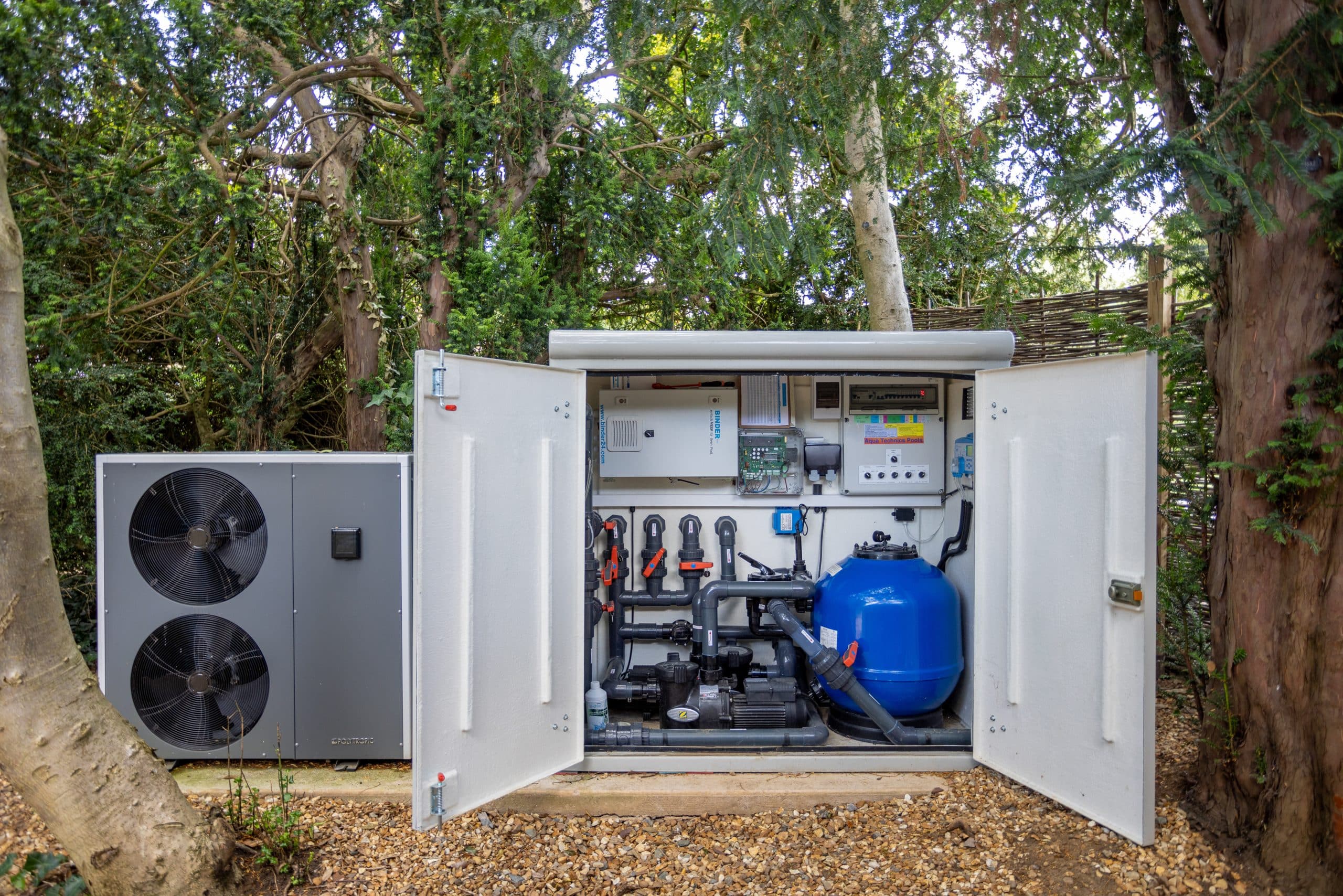
Spring is the right time to properly commission your pool equipment, not just switch it back on and hope for the best. Check your pump for leaks, confirm flow rates are normal, and prime it fully before regular use begins. Your heating system deserves particular attention. Whether you run a heat pump, gas heater, or solar system, run it through a full heating cycle to confirm it’s reaching and holding temperature correctly. A heating system that underperforms in April will only become a bigger problem come summer. Finally, test automatic covers, dosing pumps, and any smart controls to make sure everything is correctly set up for the season ahead. Small issues caught now take minutes to fix. If left until the pool is in daily use, they rarely stay unnoticed.
Clean Thoroughly Before First Use
Brush down the walls and floor of the pool, vacuum any debris from the bottom, and clean out your skimmer and pump baskets. If you used a winter cover, clean and dry it before storing it away.
Summer: Keeping Your Pool in Peak Condition
Summer is when your pool works hardest. Increased use, higher temperatures, and more sunlight all accelerate chemical consumption and create conditions where algae and bacteria can thrive if left unchecked.
Test the Water at Least once a week
During peak season, water chemistry can shift quickly, particularly after heavy use or a period of warm weather. Test pH and sanitiser levels at minimum once per week. Keeping on top of this prevents the kind of imbalances that turn clear water green overnight.
Maintain Your Filtration System
Your filter is your pool’s first line of defence. Run it for at least eight hours per day during summer, and backwash or clean the filter media regularly according to the manufacturer’s guidance. A dirty or underperforming filter allows contaminants to build up faster than your chemicals can handle.
Watch for Algae
Green, yellow, or black patches on pool surfaces are a sign of algae growth. If caught early, a targeted algaecide treatment combined with brushing and shocking the pool will deal with the problem. Left untreated, algae can take hold quickly and become significantly harder to clear.
Autumn: Preparing for Reduced Use
As temperatures drop and swimming frequency decreases, your maintenance routine should shift focus from active management to protection.
Adjust Chemical Dosing
Cooler water needs less sanitiser than warm water, but that doesn’t mean you can stop treating it entirely. Reduce dosing in line with reduced use, but continue testing weekly. Algae can still develop in cool water, particularly in pools that aren’t circulating regularly.
Clear Debris Before It Becomes a Problem
Autumn leaves are one of the biggest maintenance headaches for pool owners. A large volume of organic debris decomposing in your pool water will spike phosphate levels and encourage algae growth. Skim and vacuum more frequently during leaf fall, and consider a leaf net cover to reduce the volume entering the water.
Service Your Equipment
Autumn is a sensible time to book a professional service for your pump, automatic cover, dosing systems, heater, and filtration system before the quieter winter months. If anything needs repair or replacement, getting it sorted now avoids delays when you want the pool up and running in spring. Our pool maintenance team covers all of this as part of our seasonal service offering.
Winter: Protecting Your Pool During the Off-Season
For most UK homeowners, winter means significantly reduced pool use. How you manage the pool during this period has a direct impact on how much work is required to get it back to full condition in spring.
Keep the Circulation Running
One of the most common winter mistakes is turning off the pump entirely. Even in cold weather, water needs to keep moving. Stagnant water develops chemical imbalances faster, and in freezing conditions, static water in pipes and equipment can cause serious damage. Keep your pump running on a reduced cycle throughout winter.
Use a Quality Winter Cover
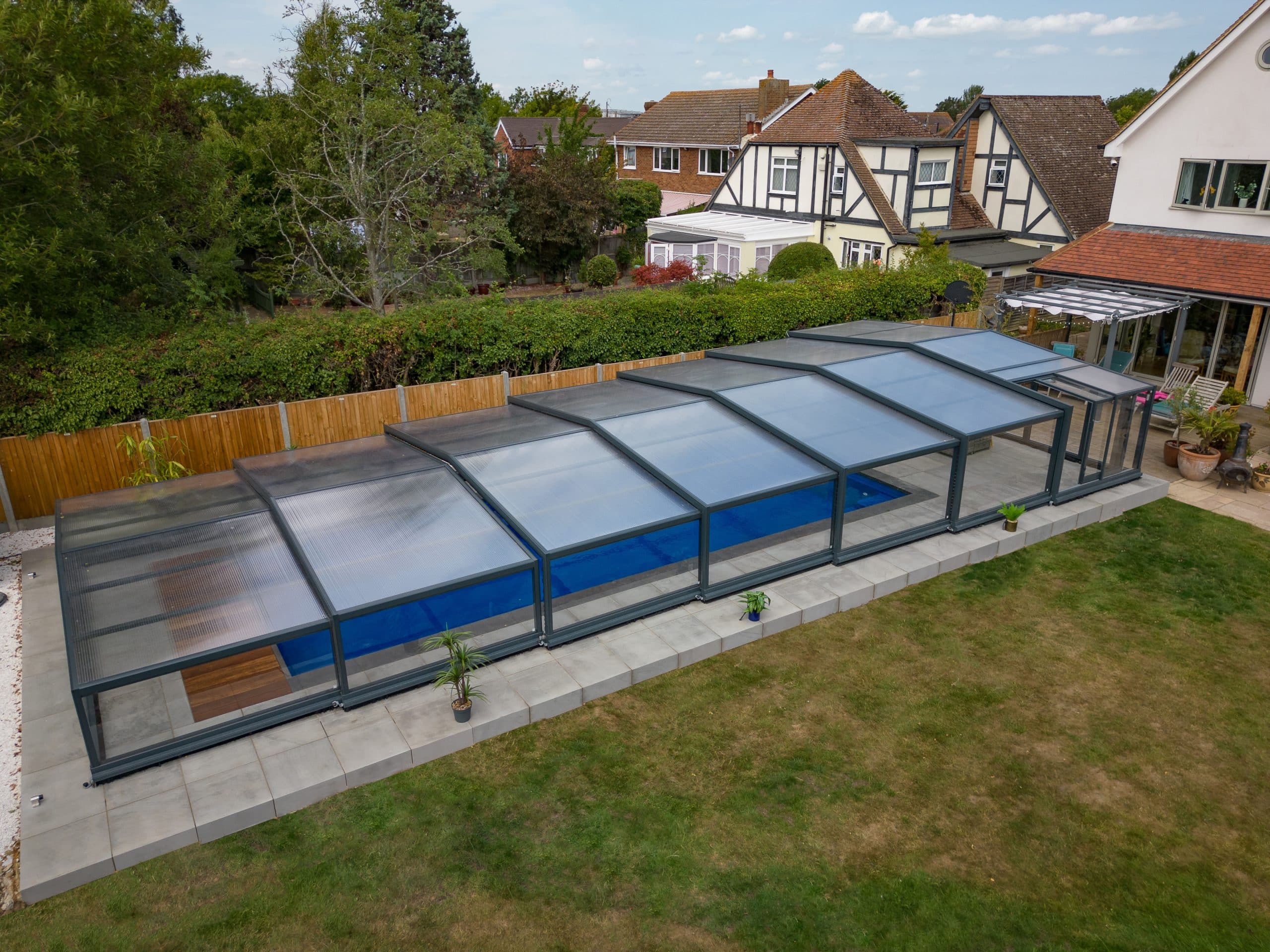
A well-fitting pool cover does several important jobs during winter. It keeps debris out, reduces heat loss, limits chemical evaporation, and protects the pool surface from the elements. Make sure your cover is secured properly – a poorly fitted cover can cause more problems than it solves.
Monitor Water Levels and Chemistry Monthly
Even in winter, check your water chemistry at least once a month. Maintaining broadly correct chemical levels during the off-season makes the spring opening process considerably quicker and cheaper. If you notice anything unusual such as discolouration, strong odours, or visible debris build-up, address it promptly rather than leaving it until spring.
When to Call in the Professionals
DIY pool maintenance is entirely manageable for many homeowners, but there are times when professional support makes more sense. If you’re dealing with a persistent algae problem that won’t clear, unexplained water loss that might indicate a leak, equipment that isn’t performing as it should, or simply don’t have the time to keep up with a consistent routine, a professional maintenance service is the right call.
At XL Pools, we provide professional pool maintenance for homeowners across Kent and the South East. Our team handles everything from routine chemical balancing and equipment checks to full seasonal opening and closing services – so you can spend less time managing your pool and more time enjoying it. If you’d like to find out more about how we work, visit our about us page or get in touch to discuss what your pool needs.
Keep Your Pool in the Best Possible Condition
A well-maintained pool is a joy to own. It’s safe, it looks beautiful, and it’s ready to use whenever you want it. The key is consistency. Small, regular actions throughout the year will always outperform a reactive approach that only kicks in when something goes wrong.
Whether you manage your own maintenance or work with a professional team, the seasonal framework above gives you a clear picture of what good pool care looks like. If you’d like to know more about the pools we install and the standard they’re built to, take a look at our completed pool projects.


